
Category: Women’s Health |
Reading Time: 9 minutes |
Last Updated: May 3, 2026 |
Reviewed by: Doctor In My Home Editorial Team
In many homes today, screens stay with us from the moment we wake until the last light goes out at night. Phones, laptops, tablets, and televisions quietly shape our daily rhythm in ways we rarely stop to examine.
Most people notice the obvious effects first — tired eyes, disrupted sleep, neck tension. But a quieter, less-discussed connection is now drawing attention from researchers and holistic health practitioners alike: the relationship between excessive screen time and female sexual wellness.
This connection is not about screens being inherently harmful. It is about what happens when the body loses its natural rhythm — its hormonal timing, its emotional capacity for connection, its ability to fully rest and restore. Understanding these signals early gives women the opportunity to gently restore balance before larger imbalances develop.
This guide explores that relationship honestly — drawing on both modern research and time-tested wisdom from six healing traditions.
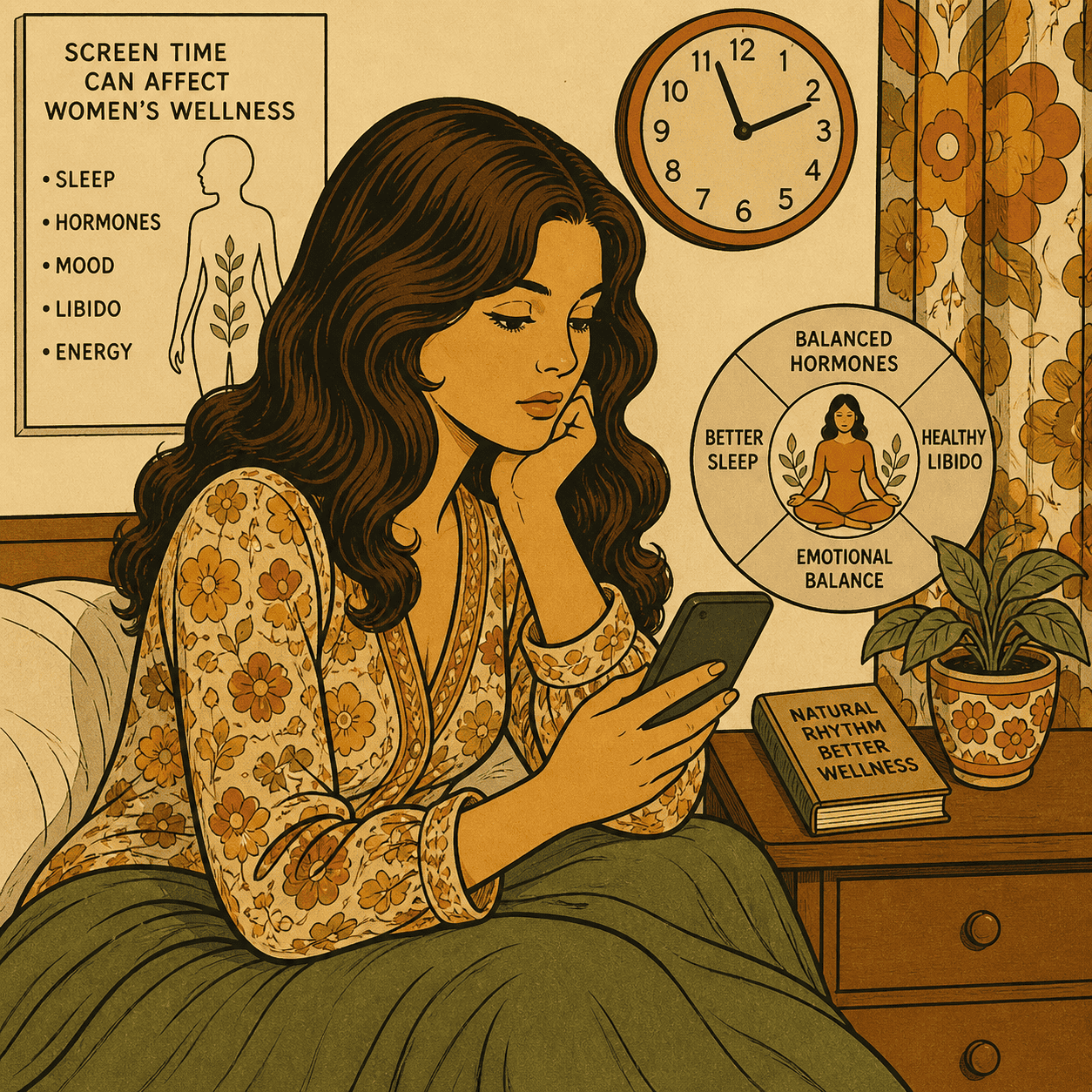
How Screen Time Quietly Disrupts the Body’s Natural Rhythm
Female sexual wellness is not a single system. It depends on several interconnected processes working in harmony:
- Hormonal balance — oestrogen, progesterone, testosterone, cortisol, and melatonin all play a role
- Sleep quality — deep, restorative sleep is when hormonal regulation and repair happen
- Emotional safety — the nervous system must feel safe and settled for desire to arise naturally
- Pelvic circulation — blood flow to reproductive organs supports lubrication, sensitivity, and comfort
- Mental spaciousness — a mind that is constantly stimulated struggles to shift into receptive, intimate states
When screen exposure becomes excessive — particularly in the hours before sleep — each of these systems can be gently but persistently disrupted. The effects accumulate slowly, which is why many women do not connect their changing experience of intimacy with their screen habits.
The Blue Light Problem: What It Does to Female Hormones
Screens emit blue-spectrum light. During daylight hours, this light is natural and helpful — it supports alertness, mood, and cognitive function. But when blue light exposure continues into the evening, it sends a false signal to the brain: it is still daytime.
The pineal gland, which produces melatonin — the body’s primary sleep and rhythm hormone — responds by delaying or reducing its output. For women, this matters deeply because melatonin does far more than help with sleep:
- It supports menstrual cycle regularity
- It protects ovarian function and egg quality
- It modulates oestrogen levels
- It reduces cortisol (the primary stress hormone) in the evening
- It signals the body that recovery time has arrived
When melatonin is consistently delayed or suppressed, the hormonal cascade that supports female reproductive health can gradually fall out of balance. Some women notice this as cycle irregularity. Others experience reduced libido, dryness, emotional flatness, or difficulty relaxing into intimacy — changes they often attribute to stress or age rather than screen habits.
A 2021 review published in the Journal of Clinical Endocrinology found that artificial light exposure at night was associated with altered reproductive hormone patterns in women of reproductive age.
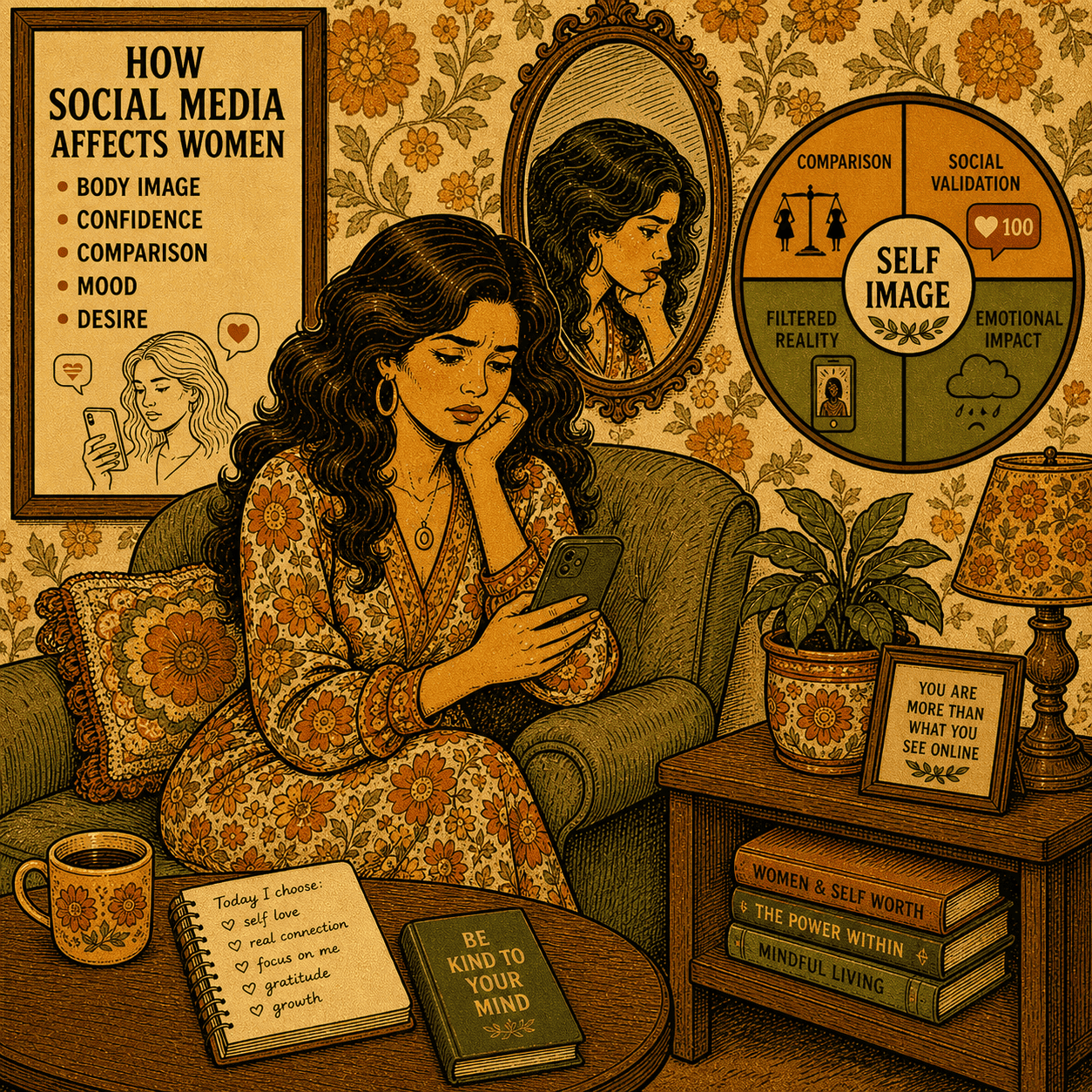
Social Media, Body Image, and the Quiet Erosion of Sexual Confidence
Beyond blue light, the content consumed on screens shapes sexual wellness in subtle but powerful ways.
Social media platforms are designed to keep users scrolling — which means they are designed to generate comparison, aspiration, and mild dissatisfaction. For women, this environment creates a constant, low-level exposure to curated images of bodies, relationships, and lifestyles that rarely reflect reality.
Research consistently links heavy social media use in women to:
- Increased body dissatisfaction
- Reduced sexual confidence and self-image
- Heightened anxiety about appearance during intimacy
- Reduced ability to be fully present with a partner
- Emotional withdrawal from relationships
These effects are rarely dramatic. They appear gradually — a woman notices she feels less comfortable in her body, less naturally drawn to intimacy, more distracted during close moments. The connection to screen content often goes unnoticed.
Mental Overload: When the Brain Cannot Switch Off
The brain has two primary operating modes: active engagement and restorative rest. Healthy sexual response — including desire, arousal, and emotional connection — requires the brain to shift from active to restful states.
Continuous scrolling, notifications, and digital stimulation keep the brain in a persistent low-level activation state. Even when the body is physically still, the nervous system remains alert and engaged. Over time, this makes the transition into intimate, receptive states increasingly difficult.
Women experiencing this often describe it as:
- “My mind just won’t quiet down.”
- “I feel present but not really here.”
- “I want to feel connected but I feel numb.”
- “I’m exhausted but still can’t fully relax.”
This is not a psychological problem. It is a nervous system problem — one that responds well to intentional digital rest and specific holistic practices.
Sedentary Screen Habits and Pelvic Health
Extended periods of sitting — often accompanying heavy screen use — reduce circulation to the pelvic region. Healthy pelvic circulation supports:
- Natural lubrication and comfort
- Sensitivity and physical pleasure
- Hormonal communication between reproductive organs and the brain
- Pelvic floor tone and function
While reduced pelvic circulation alone is rarely the primary cause of sexual wellness changes, it contributes to a broader pattern — particularly when combined with hormonal disruption, mental overload, and poor sleep. Movement is not optional for female sexual health. It is essential.
The Notification Loop: How Constant Alerts Keep the Body in Stress Mode
Every notification — every buzz, ping, and light-up — triggers a micro-stress response in the nervous system. The body briefly prepares to respond, then returns to baseline. When this happens dozens or hundreds of times per day, the cumulative effect is a chronically elevated stress baseline.
Elevated cortisol — the primary stress hormone — directly suppresses sex hormone production. The body, perceiving itself to be under constant low-level threat, deprioritises reproduction and intimacy in favour of alertness and survival. This is not a character flaw. It is evolutionary biology responding to a modern environment.
Creating screen-free periods — especially in the morning and evening — allows cortisol to follow its natural daily rhythm, which in turn creates space for oestrogen, testosterone, and desire to operate more freely.
Early Signs the Body Is Asking for Digital Rest
The body communicates imbalance long before major symptoms develop. Women may notice:
- Difficulty falling or staying asleep despite feeling tired
- Waking unrefreshed even after adequate hours of sleep
- Reduced natural interest in intimacy without a clear emotional reason
- Dryness or mild discomfort
- Feeling emotionally distant from a partner
- Irregular or shifted menstrual timing
- Heightened anxiety in social or intimate situations
- Brain fog or reduced concentration
- Difficulty feeling fully present during intimate moments
These signals are not diagnoses. They are invitations — the body’s way of asking for restoration before deeper imbalance develops.
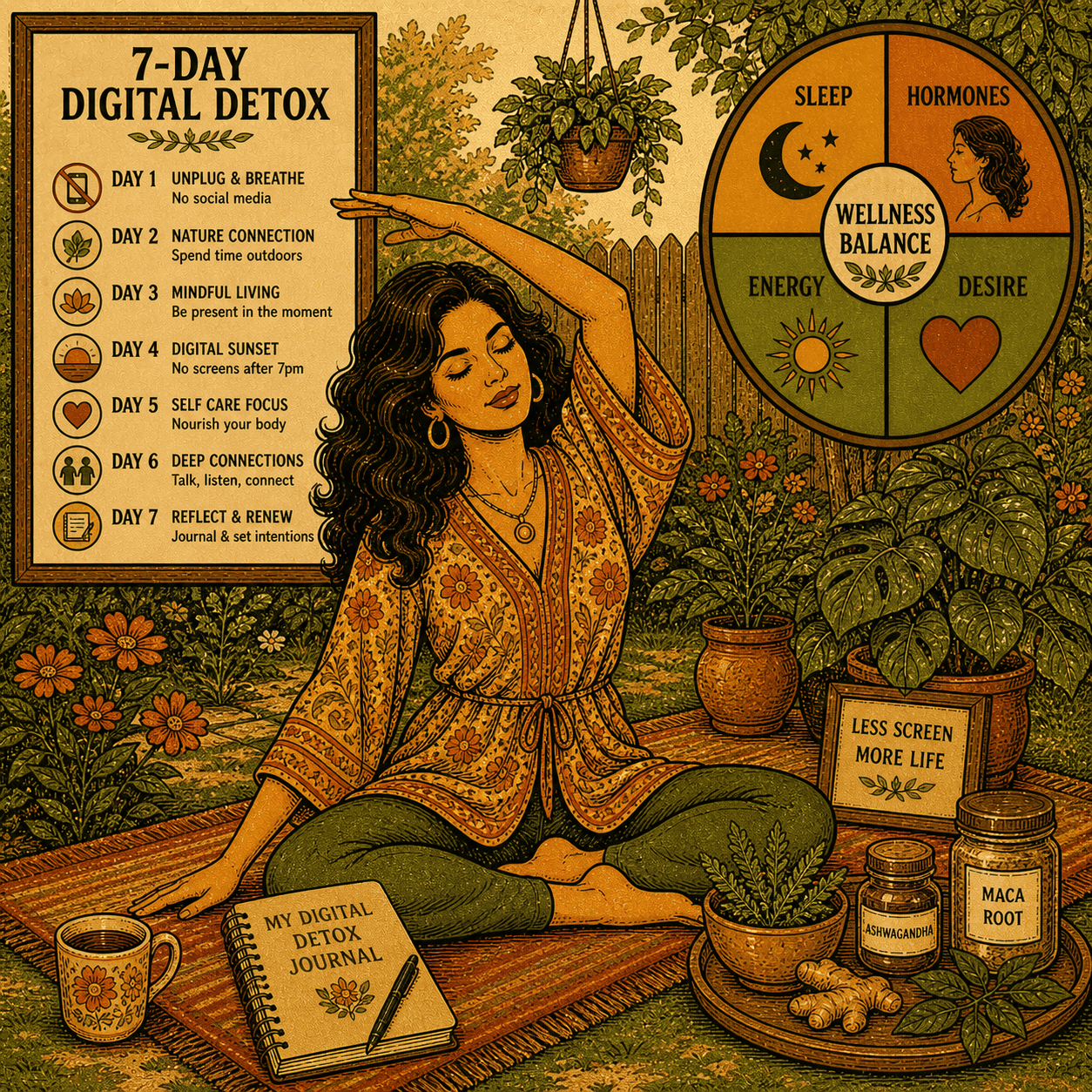
A 7-Day Digital Detox Plan for Sexual Wellness
A gentle, structured reduction in screen exposure — particularly in the evening — can produce noticeable improvements in sleep quality, hormonal rhythm, and intimate wellbeing within one to two weeks.
Foods That Support Hormone Balance and Sexual Wellness
Nutrition plays a direct role in hormonal health. These foods support the systems most affected by screen-related disruption:
- Sesame seeds — rich in lignans that support oestrogen balance
- Pumpkin seeds — high in zinc, essential for testosterone and progesterone production
- Walnuts — omega-3 fatty acids support brain health and hormonal signalling
- Dark leafy greens — magnesium and folate for nervous system calm and hormonal support
- Warm milk with nutmeg — traditional Ayurvedic sleep and nervous system support
- Fermented foods — gut health directly influences oestrogen metabolism and mood
- Avocado — healthy fats are the raw material for hormone production
- Dark chocolate (70%+) — magnesium, mood-supportive phenylethylamine compounds
Regular meal timing — eating at consistent times daily — also supports hormonal rhythm by anchoring the body’s circadian clock, which screens often disrupt.
Movement That Supports Pelvic Health and Intimacy
Targeted movement helps restore pelvic circulation, reduce cortisol, and signal safety to the nervous system — all of which directly support sexual wellness:
- Evening walks — gentle cardiovascular movement that reduces cortisol and improves sleep quality naturally
- Hip-opening yoga poses — Butterfly, Pigeon, Reclined Bound Angle — restore pelvic circulation and release emotional tension stored in the hips
- Pelvic floor exercises — strengthen and bring awareness to pelvic muscles that support arousal and comfort
- Qi Gong for women — specific sequences that move energy through the reproductive meridians in Traditional Chinese Medicine
- Dance — freely moving the body to music reconnects women to physical pleasure and body confidence in a way few other practices can
Herbal formula: Ba Zhen Tang
Qi Gong for women: 15 min daily
Ignatia 30C — stress-related disconnection
Natrum Mur 30C — dryness, emotional withdrawal
Magnesium glycinate 200–400mg before sleep
Screen-free meals, morning sunlight daily
Restorative yoga before sleep
Gratitude journaling (5 min daily)
Partner Involvement: Creating Screen-Free Space Together
Sexual wellness within relationships is a shared ecosystem. When one or both partners are habitually on screens during evening hours, the emotional and physical space needed for intimacy gradually disappears — not through conflict, but through quiet erosion of presence.
Some gentle steps that couples find helpful:
- Phone-free meals — even 20 minutes of undistracted conversation rebuilds emotional connection meaningfully
- Shared screen-free evenings — one or two evenings per week without television or phones creates genuine space for intimacy
- Morning rituals without screens — spending the first 15 minutes of the day together in quiet connection sets a different tone
- Naming the pattern — simply acknowledging to a partner that screens are affecting emotional closeness opens the door for change without blame or conflict
Research from the Gottman Institute consistently shows that emotional connection — feeling seen and heard — is the foundation of sexual desire in long-term relationships. Screens disrupt that connection more than almost any other modern habit.
When to Seek Professional Support
While many women find that lifestyle and holistic adjustments significantly improve their experience of sexual wellness, some changes benefit from professional evaluation. It is helpful to consult a healthcare provider if you experience:
- Persistent menstrual irregularity lasting more than two or three cycles
- Significant, unexplained dryness or discomfort during intimacy
- Complete loss of desire lasting more than a few months
- Pain during intimacy
- Symptoms of hormonal imbalance (unusual hair loss, skin changes, unexplained weight changes)
- Mood changes that significantly affect daily functioning
Integrative practitioners — including naturopaths, functional medicine doctors, Ayurvedic practitioners, and Traditional Chinese Medicine physicians — can offer comprehensive assessment that bridges natural and conventional approaches.
A Final Word: Rhythm, Not Restriction
The goal is not to fear screens or to eliminate them from life. Screens are tools — useful, often essential, and here to stay.
The goal is to restore rhythm.
The female body is deeply rhythmic. It follows cycles — daily, monthly, seasonal. When the natural signals that govern those cycles — light, darkness, rest, movement, connection — are consistently overridden by artificial stimulation, the body loses its compass.
Small, consistent changes in how and when we use screens can give that compass back. Better sleep follows. Hormones begin to settle. The nervous system finds its natural resting tone. And within that restored rhythm, desire, comfort, and intimacy often return — not dramatically, but quietly, the way the body has always worked best.
This article was written by the Doctor In My Home editorial team. It is intended for informational and educational purposes only and does not constitute medical advice. It is not a substitute for professional medical advice, diagnosis, or treatment. Always seek the guidance of a qualified healthcare provider with any questions you may have regarding a medical condition.
Leave a Reply